
Understanding the new Ofsted rating system
Ofsted has changed the way it assesses nurseries and early years settings. This page is a guide to help you understand their new framework.
Ofsted reports offer an insight into life at education settings and how they support children to learn, develop and thrive. From November 2025, Ofsted introduced a new approach to inspecting and grading nurseries. The new system is designed to give parents a clearer understanding of a nursery’s quality and performance across a range of areas, with a stronger focus on children's day-to-day experiences and how well settings prepare them for the next stage of their journey.
Rather than receiving a single overall grade, nurseries are now graded across a number of different areas, giving a more detailed picture of a setting's strengths. The grading scale has also changed, with new grades replacing the previous system. You can find details of both the grades and assessment areas below. Most nurseries will also now be inspected every four years, rather than every six, helping to ensure reports provide a more up-to-date view of the quality of care and education on offer.
The new grading system
As part of these changes, the previous overall grades of Outstanding, Good, Requires Improvement and Inadequate have been replaced with a new grading system.
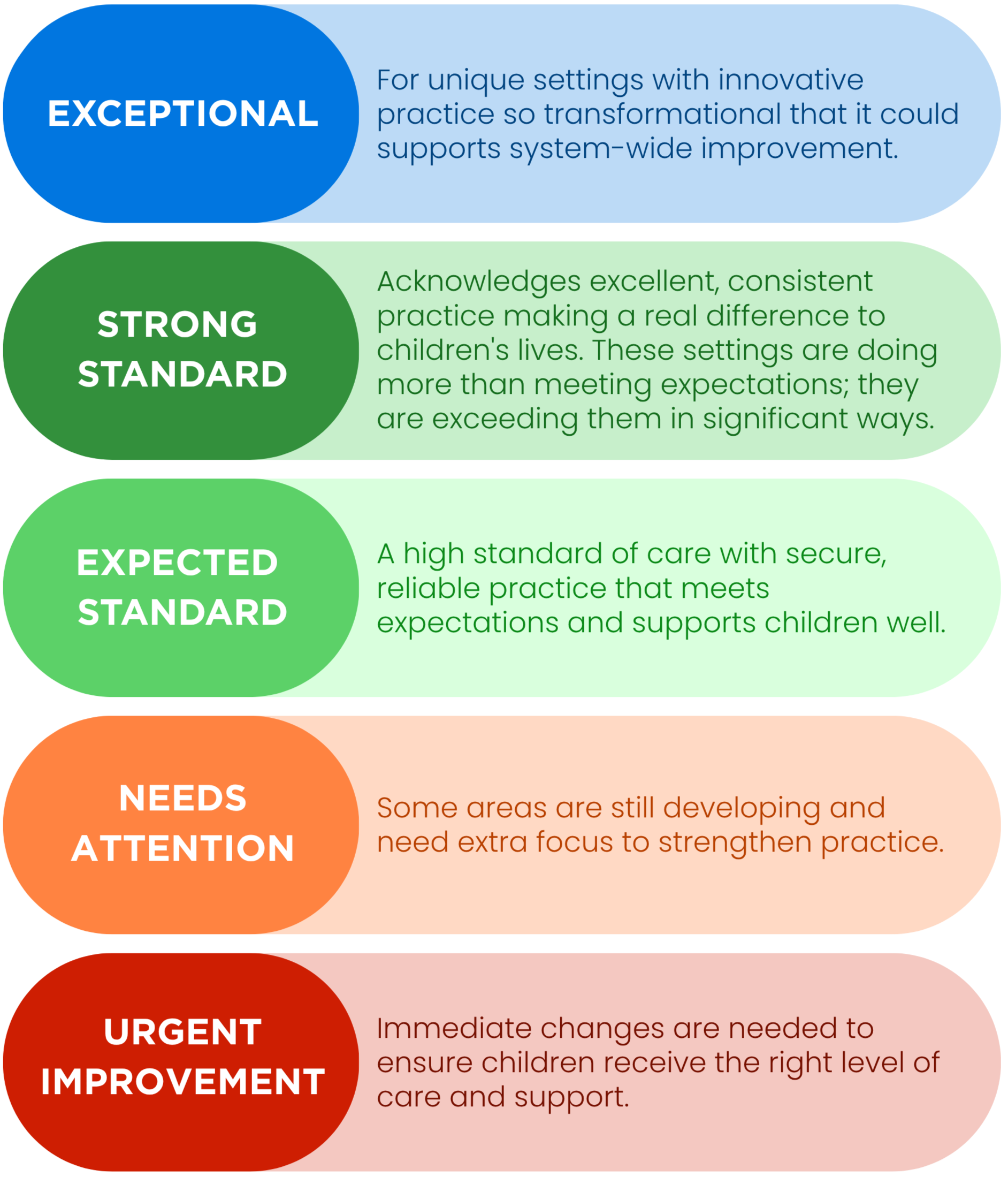
The new grading categories are:
Exceptional
Strong Standard
Expected Standard
Needs Attention
Urgent Improvement
Ofsted will now make a separate judgement on whether a setting has met or not met safeguarding requirements.
Ofsted has also introduced an additional fifth grade, Exceptional, which sits above the other grades and is intended to recognise the best settings nationally that demonstrate exemplary practice that should be shared widely to inspire and support sector improvement. Exceptional grades award a transformational impact on the outcomes and experiences of vulnerable and disadvantaged children.
How are nurseries assessed?
Nurseries are given a grade for each of the areas below, helping to provide a detailed picture of the quality of education, care and support they provide.
On this page, when the term vulnerable and disadvantaged children is used, this refers to disadvantaged children, those with SEND, those who are known (or previously known) to children’s social care, and those who may face barriers to their learning and/or well-being.
-
This area looks at how well leaders and staff identify and support children who may need extra help, including:
children from disadvantaged backgrounds
children with SEND
children who are known (or previously known) to children’s social care
children who may face other barriers to their learning and/or well-being, which may include children who share a protected characteristic
-
This area looks at:
whether all children are offered a high-quality, ambitious curriculum
how well staff plan and deliver learning following the EYFS statutory framework to create a coherent and sequential curriculum so that children build on what they already know and can do
how effectively the curriculum meets the needs of all children, especially vulnerable and disadvantaged children
-
This area looks at:
how well children, especially vulnerable and disadvantaged children, gain the knowledge, skills and experiences they need for their next stage of learning, including school where relevant
the progress children make from their starting points across all areas of learning as set out by EYFS, particularly vulnerable and disadvantaged children
-
This area looks at whether:
the setting creates an environment that positively supports children’s learning, development and care
staff support children’s behaviour and attitudes, including how they teach children to understand and manage their own emotions and behaviour and to relate to others
settings work with parents to establish good routines and encourage regular attendance so that children, including vulnerable and disadvantaged children, form good habits for future learning
the setting has an impact on the behaviour, attitudes and routines of children receiving additional support, including vulnerable and disadvantaged children.
-
This area looks at how well the setting:
promotes children’s welfare and well-being
ensures that children receive the care and support they need to achieve and thrive in the setting and beyond
-
This area looks at:
whether leaders understand and meet the statutory requirements set out in the EYFS
the commitment of leaders and those responsible for governance to provide high standards of education and care to improve the lives of all children, especially vulnerable and disadvantaged children